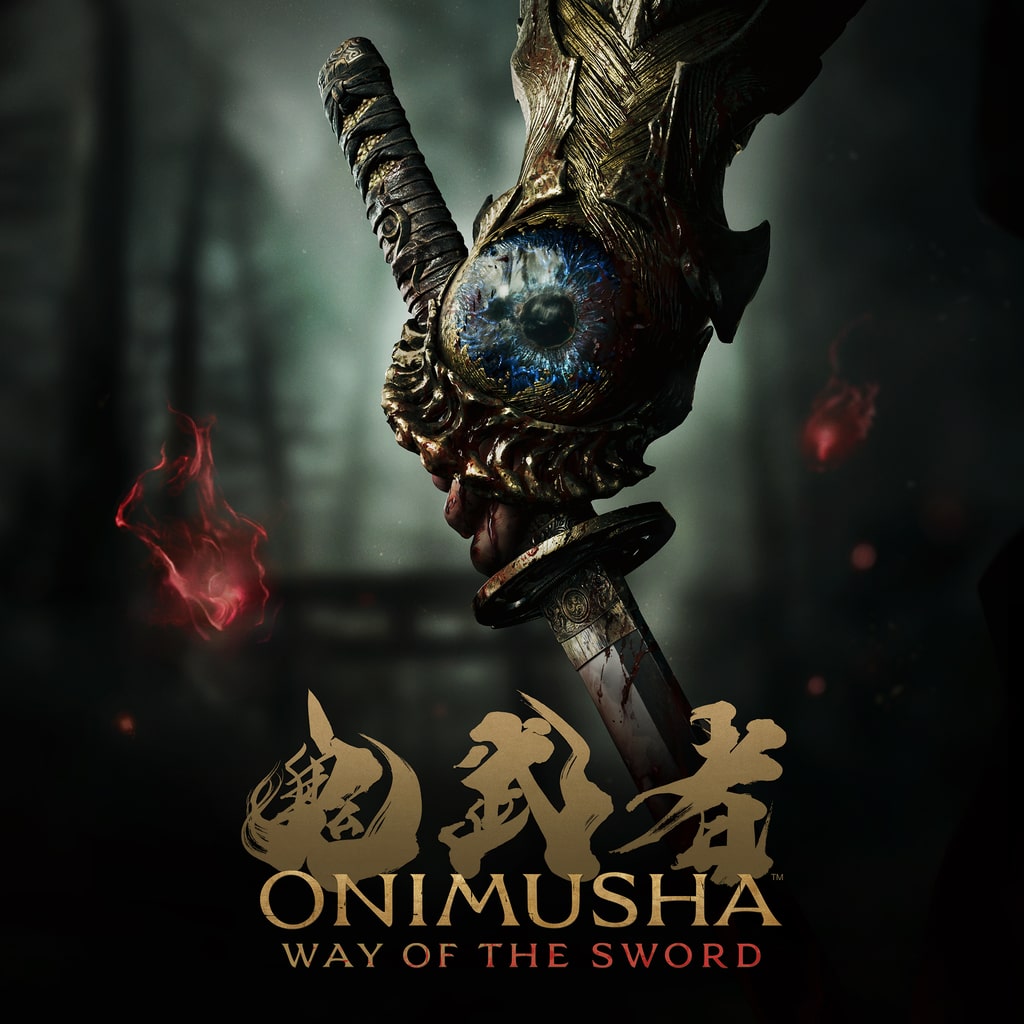
(This blog contains spoilers for Onimusha: Way of the Sword)
When the PS2 released in the US, it felt like a huge magical leap. That in a short number of years we went from blocky polygons to amazingly rendered models and backgrounds felt like a dream. In truth it’s probably the hugest technological leap in the history of video games, between both storage increase and graphic fidelity.
My older brother had decided he was going to go and get one. He was a lot older than me, and he had a job and I think he’d already graduated from high school at this point, but that part of the memory is foggy. Regardless, I’d been looking at a lot of games in a magazine, seeing what cool new stuff was being released for this insane system. One game in particular caught my eye: Onimusha.
I’d been playing a lot of turn-based RPG’s at this point in my life and I really wanted to try an action RPG. Onimusha is…not really an RPG, but I hadn’t really realized that. My brother announced he was going to go buy one and I was ecstatic. I went up to him and, in the selfish way of a young child at age 11 or 12, told him, “You gotta get Onimusha with it!” He did that typical dismissive nod and went. I waited and waited and, after getting out of the shower, found he had come back. I checked to see what game he bought and…
He had bought Gran Turismo 3: A-Spec.
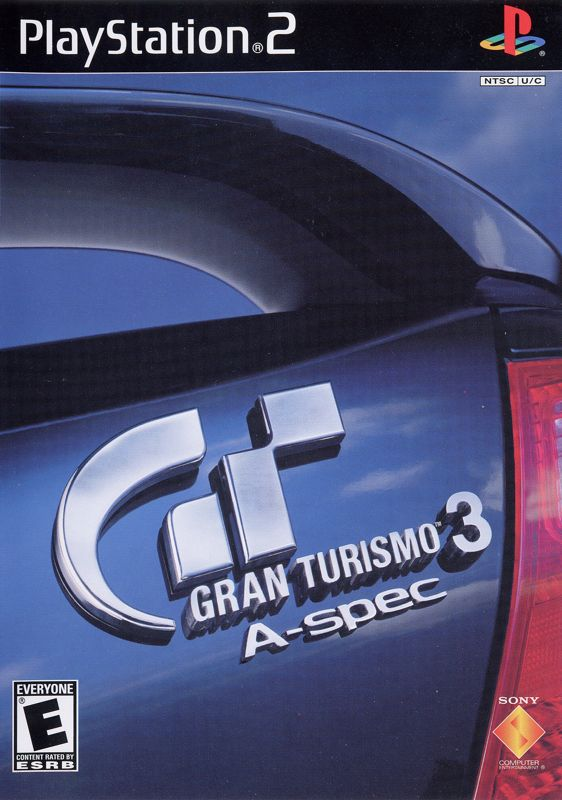
Apparently this particular entry is remembered fondly for being extremely good, but I had less than zero interest in realistic racing games and, knowing my brother, was also not surprised to see this. I watched him play it for a bit, and he eventually stopped. I took this opportunity to play this brand new, amazing PS2 just to say I could experience it.
All I can remember of Gran Turismo 3 is wanting to do a race, but I couldn’t, so I instead had to earn a drivers license, which meant I had to drive by following some dashed lines and doing driving techniques according to the color of the line. I got frustrated with how hard it was and eventually stopped playing. My brother also stopped playing it too, so I guess neither of us liked it.
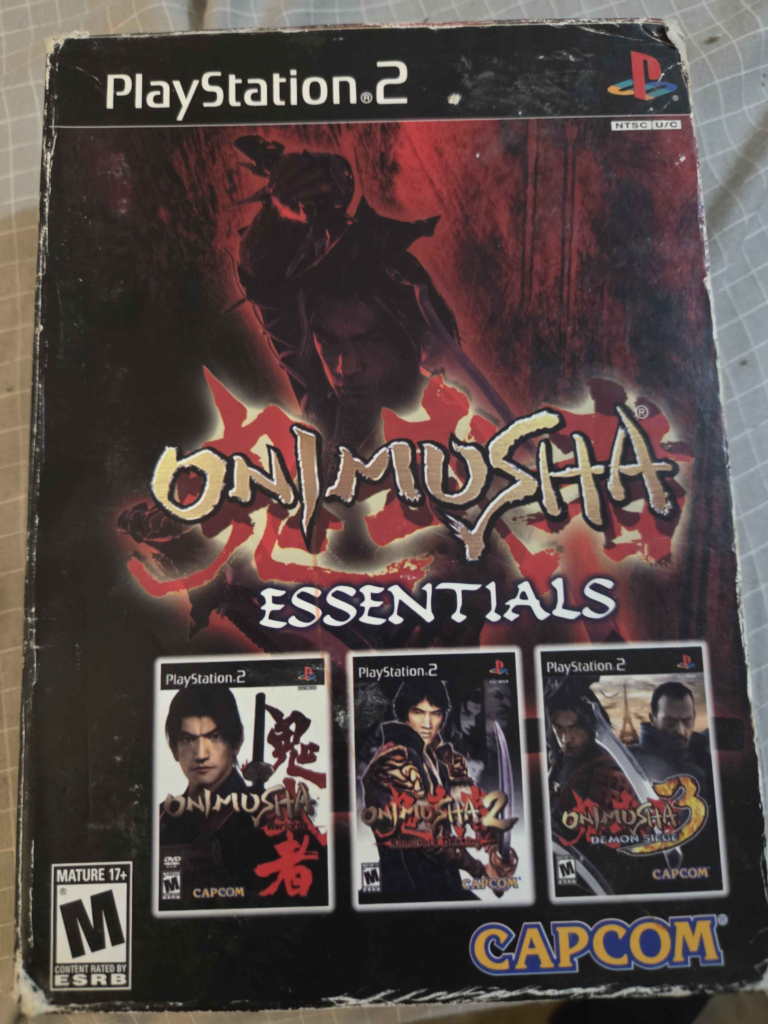
I did eventually get my own PS2, but enough time had passed that I didn’t really think about it anymore. Instead I was in awe of games like Final Fantasy X, or even .hack//Infection, and went back into my comfort zone. I’d have occasional reminders of it, such as when Onimusha 3 released and I saw constant advertisements and shows gushing praise about that games opening France cutscene. Eventually though, as the PS2 was nearing the end of its lifecycle, some companies started releasing their games in sets. GTA had a set, and I think Devil May Cry also had a set as well. But for me, the set I bought for about $30 was the Onimusha Essentials trilogy.
After Onimusha Dawn of Dreams, the series became dormant. Many new console generations came and went, with no mention whatsoever of a new Onimusha. Lots of theories popped up: The series was made by Keiji Inafune, who later left Capcom and started Comcept but slowly started to go insane and ripped off a lot of people on Kickstarter. Maybe they didn’t want to bring it back because of bad relations? No one knew for sure.
We did however, get an HD remaster of the original, which included a couple small QOL changes such as free movement with optional tank controls as well as easy weapon swapping. But as anyone who loves retro games knows, any time a retro game gets a remaster with few changes to it, the snarky asshole reviewers tear it to shreds because “It’s an old game that should’ve stayed in the past where it belongs. Who wants to play this?”
I’d also read the remaster hadn’t sold too well either, so that felt like the death knell for the franchise. I’d resigned myself to accepting that this is just how it is for old games, and that I have to just learn to love them as they are and accept that in modern day, outside of the niche retro community, games that get brought back will always be highly scrutinized.
And then Capcom announced a new Onimusha game in 2024.
Expectations swelled and I was beyond ecstatic. So much so that when I saw the reveal I started squealing while sitting on the couch at my fiances friends house, whom I’d never met until that day. As someone with severe anxiety, that was extremely out of character, but it was hard to care when after almost 20 years of nothing, there was finally something new in a supposedly dead franchise you loved.
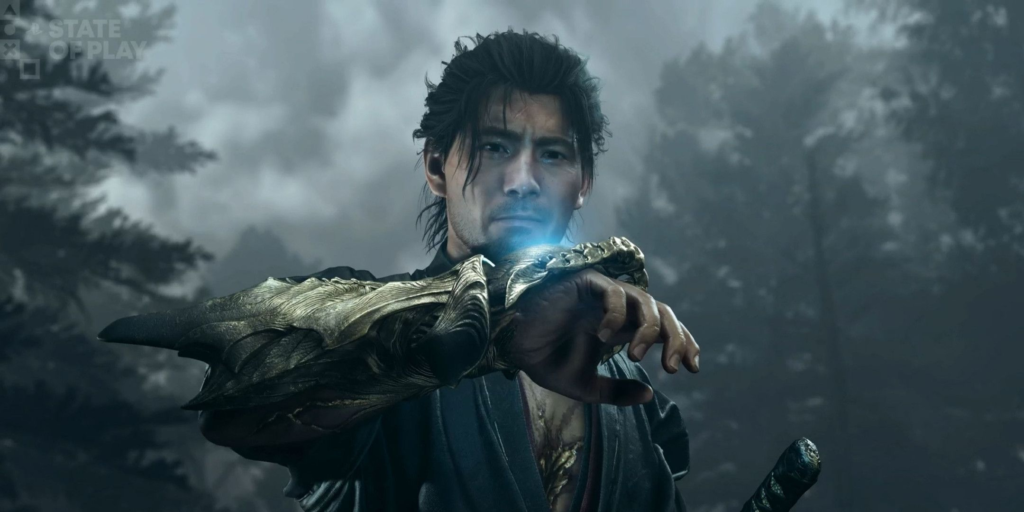
After watching the trailer though, I had funny feeling from just watching the little bit of gameplay that it…kinda looked a bit like Sekiro. There was a lot of parrying going on, and I had this inkling that this game wasn’t going to be anything like the old games. Which, I mean, fair enough. It’s a modern game and will have modern sensibilities. I tried to keep all my expectations in check.
Finally, the game launched on September 4th, a rare case where the release date was pushed forward instead of a delay. I started up the game, played it all the way through and, well…
I didn’t hate it, but I certainly didn’t love it either.
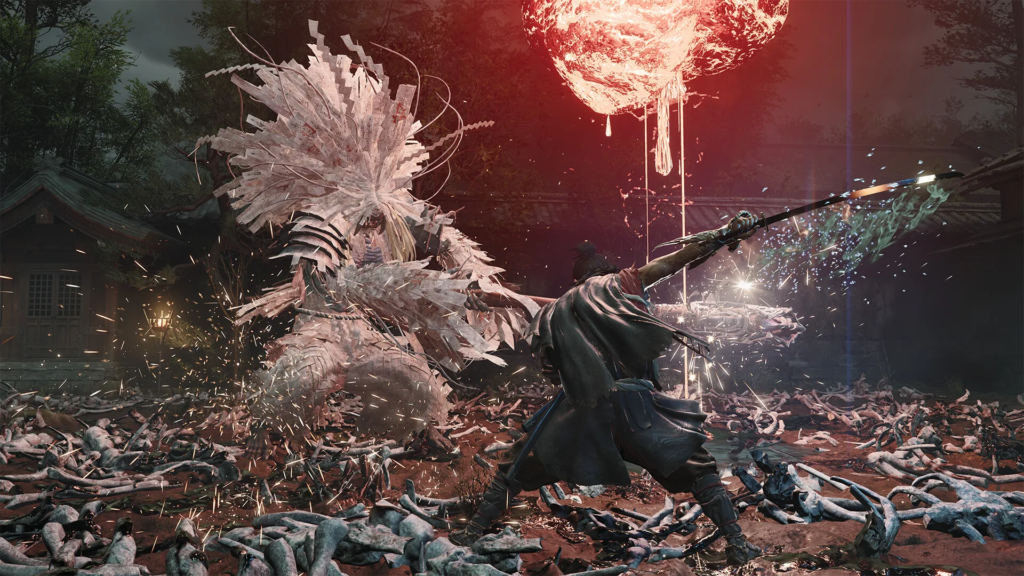
In Way of the Sword, you play as the legendary samurai Miyamoto Musashi, who I would assume based on how he acted is more ronin than samurai. He picks a fight with a master of a dojo, whom he wins against easily. As he flees from town after being assaulted by that dojos students, he encounters the genma. Despite his best efforts, the genma easily cut him down and he dies. While drifting in hell, Musashi awakens, only to be pulled up by a mysterious man who forcefully puts a gauntlet on his arm.
Musashi is then resurrected and he finds that with his new gauntlet, he is able to kill the genma and he can now absorb their souls. Absorbing their souls is how the gauntlet gains strength, and he finds that there is a spirit who lives in his gauntlet. Her name is Shizuka and she serves as Musashi’s partner in the story. As the story continues, Musashi has to deal with this gauntlet being on his arm, which he very much does not want, as he feels power is earned only by oneself and should not be given freely, as he does not view the gauntlet as his own power. Despite his misgivings, he still does what he’s told from Shizuka, as he learns that the only way to remove the gauntlet is to absorb many genma souls, which will force it to come off. If it comes off sooner, he’ll drop dead for good this time.
Later, he meets two other characters, Takamura and Okuni. Takamura is a tough old man who teaches Musashi all the intricacies of his situation as well as the genma forces, while Okuni is a kabuki dancer who stays with Takamura. Unlike the other characters, she’s much more mischievous and a bit cheerful, though she also harbors an immense jealousy of Takamura and Musashi as they have the gauntlet which gives them the power to fight the genma.
Once all of this is established, the game then follows a set pattern with its story and progression. You spend a lot of time in the city, where you’ll run around doing story quest objectives, and on occasion you’ll do missions which will have you purify parts of the land, allowing you to explore more and find more treasures for upgrades and powerup items and the like. After a certain point you’ll be given a much longer main quest to go to a major zone that isn’t in the city. These zones are large but ultimately linear hallways that link rooms together. There’s some exploration to them, but it’s nowhere near the level of the city you spend time in. During these linear sections are when most major plot elements take place, as well as some of the games harder combat encounters.
The thing is though, the story never really reaches its full potential and is ultimately kinda…well, boring. After a promising start, it fizzles out pretty fast and turns into a lot of running around from point A to point B, where you’ll talk to NPC’s and learn that something terrifying is happening to them. After multiple cutscenes of learning about the fun ways the writers came up with to torture humans, you then fight the big bad who caused these problems, and then the cycle repeats.
The characters themselves also generally aren’t that interesting either. Musashi cracks jokes and one-liners and is pretty crass, albeit in a charming way at least. He doesn’t really care for Shizuka at first, calling her “gauntlet lady” when he first hears her voice which very much annoys her. I remembered reading a review before getting this where they’d said that a lot of the games charm comes from these twos interactions between each other but I found that their interactions weren’t anything to write home about, at least until near the very end of the game. They don’t ever have any real meaningful conversations with one another, as a lot of the time the dialogue amounts to Shizuka speaking in a more calm, almost robotic tone, while Musashi is just annoyed but complies anyway.
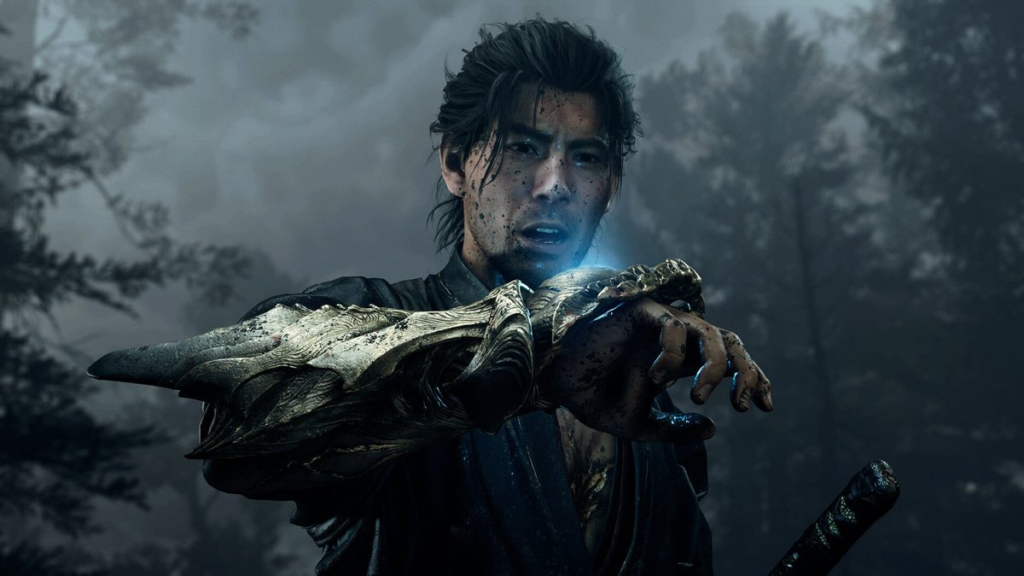
It’s not that the writing is stilted so much as it feels like it wants to be a lot of things all at once. It wants to tell you a story that is full of lore and meaning and seeping with Japanese mythology blended with that Onimusha demonic style, yet it forgets to allow its characters to have meaningful growth most of the time.
Speaking of Shizuka, the writers decided that because she’s Musashi’s companion that she should also be the players helper. Do you remember Ocarina of Time how people hated Navi because Navi will say “Hey! Listen!” and then explain to you something obvious right in front of you? Shizuka is, unfortunately, the equivalent of this games Navi the fairy.
Unlike Navi, you can’t just choose to listen to her by pressing C-Up, no she’ll just say it out loud whenever she feels like it. It’s supposed to be a camaraderie type thing where she helps out, but instead she just tells you the solution outright to any problems in the game. Because this is a modern game, you’re not allowed to be stuck for longer than 5 minutes on a cool puzzle some developers spent weeks or months developing and coming up with in their level design. Case in point, there’s a puzzle in the middle of the game involving some masks. You can shoot these masks, and you realize quickly that they need to be shot in the right order.
While I was exploring the room and looking around and experimenting with my options, Shizuka would, without any input from me, start blathering hints. As time went on and I wasn’t yet figuring it out, her hints started to become more and more obvious. And then finally, she basically told me the answer. Thanks Shizuka. She also loves to tell you what to do in combat, telling you to use your gauntlet ability to break an enemies guard, or to dodge an attack. At the worst of times it was like having a Twitch stream backseater constantly yelling at me telling me what to do, and I don’t understand why developers feel the need to do this. It’s one thing if it’s an option you can turn on, but nothing in the settings let me turn off this hint system, only the “Tips” which seemed to just be controls or explaining game mechanics.
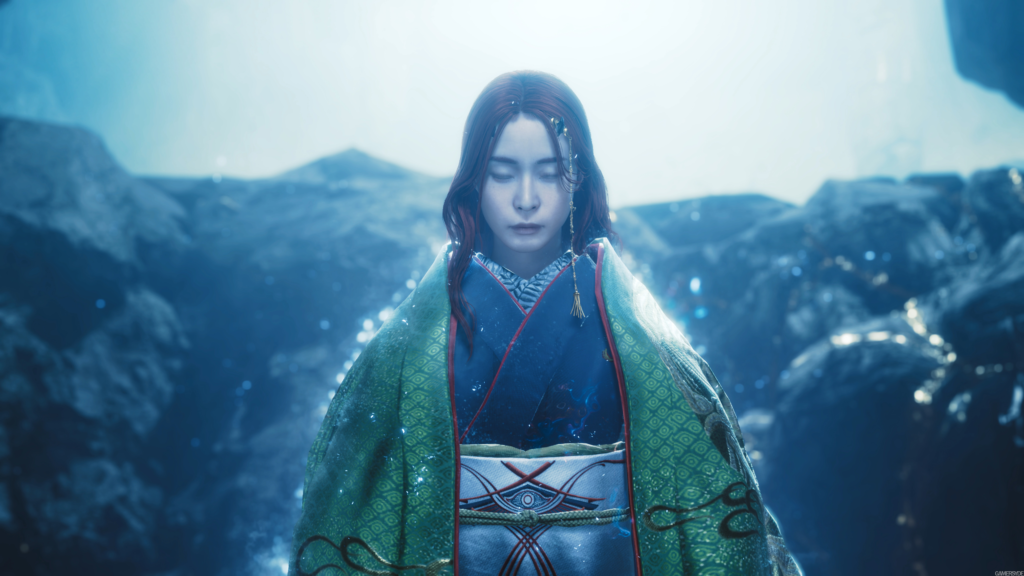
Because of this, I ended up learning to tune her out most of the time, and frankly she got on my nerves. It sucks too because when I finally started to think she was a pretty neat character, she’d just bark orders at me. Or if we were doing a sidequest involving looking at a treasure map, every minute or so her and Musashi would have a back and forth saying “Shit I can’t find this treasure!” to which the response would be “Maybe if you looked at the treasure map you’d find it!” like yes thanks game I’m ACTIVELY LOOKING IN THE CIRCLE PLEASE SHUT UP.
There’s also a scene at one point where Musashi comes to terms with power, and he comes to realize that his friends were always the powerful ones and he was not because his lust for power was what made him weak. It’s an important moment for him, but also it kind of came down to just being about “the power of love and friendship.” At the end of it however, the camera pans up to the sky, and sky shows a bright blue for the first time in the game, a symbolic representation of Musashi’s revelation and growth…and then a loading screen happens and the sky is back to being gray again. I actually laughed at it a bit, and I was honestly a bit disappointed that we went back to everything just being gray and dreary again; it would’ve been kinda cool to explore Eastern Kyoto in the sunlight. I get it, the atmosphere has to be dreary because there’s death and decay everywhere, but death and decay can still happen in direct sunlight you know. The weather doesn’t give a shit.
Another thing about the story as well is how after a while I had a cynical thought. See, this game has some of the best facial recognition technology on the market available in it, and after a point I had a realization that maybe the game wasn’t written to tell an interesting story, but was instead told to show off how cool their facial recognition is. A lot of scenes are framed to make absolutely sure you can see Musashi’s face so you can see his reaction to a comment, or see him grit his teeth as he comes dangerously close to getting swiped at. This technology is cool and all, but I’ve spent so much time in my life being wowed by amazing graphics that a lot of it starts to feel superficial.
I don’t want to fully discredit it however. There’s a scene relatively early on with Okuni where she comes to terms with something tragic, and this scene is not just well written, but also well acted, and the facial technology served to enhance the scene. The story has points of brilliance like this, and when they do it, it’s excellent and blends together two halves the join to create a cohesive whole.
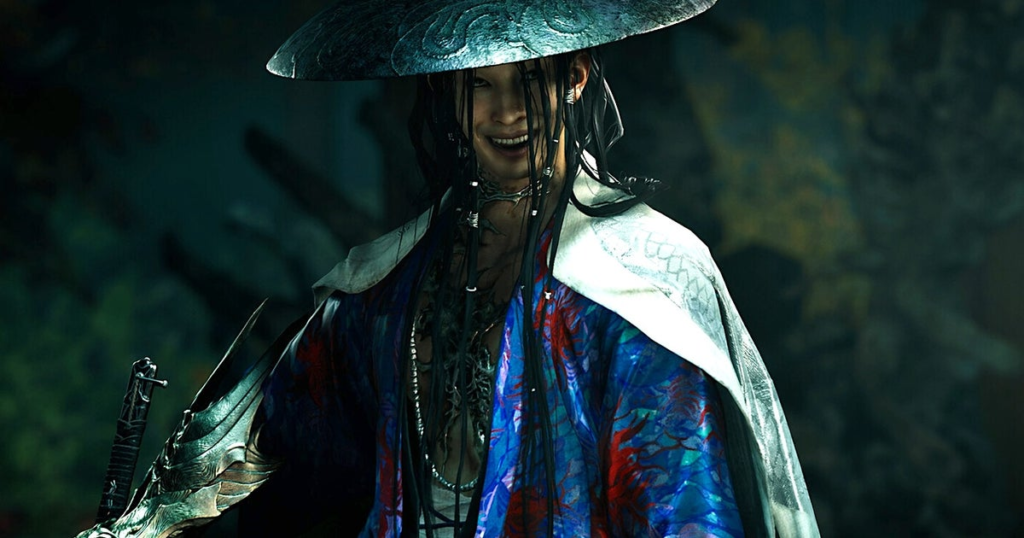
The problem is that most of the time, one half is impressive while the other half is mediocre, and by that I mean the writing is usually pretty boring. Take for instance both major antagonists. The main antagonist is established early on, and this fact never changes at any point. There are no plot twists. The bad guy is bad because he’s trying to destroy everything. Why is he trying to destroy everything? Who the fuck knows. He has zero motivation that is told to the player. He’s just some psychotic fuck who we’re told was once good but now he’s not. Maybe he became bad because he absorbed human souls in search of power because he has a gauntlet? Either way, he’s paper thin as far as a villain goes. At the very end of the game he taunts you with dialogue that’s just gross and nonsensical and that’s about the closest he ever comes to having a slight personality.
My cynical side says he’s this way because he’s intentionally supposed to be pure insanity so they can show their facial recognition tech. Right before you start the final boss fight with him, he contorts his face with his hands and acts overly silly with his face, and the camera once again loves to show you how silly and insane he is. His dialogue usually comes down to, “I’m going to take over the world and I want everything to be red. Red red red red red red.” He is, ultimately, forgettable and boring, and feels like a tech demo more than a villain.
I suppose in some ways this is pretty standard for an Onimusha game when I reflect on it. The main bad guy in the original trilogy always involved Nobunaga Oda in some form, and he didn’t really have much going for him either, though he never has much to him any game he’s in outside of being a mad conqueror type. But still, we’ve had 20 years to figure this kind of thing out, and I have higher expectations now for a sequel, especially one that took so very long to get.
Okay, so the story was disappointing. That’s fine, a game can have a kinda bland story, but if it has fun gameplay then it can still be a good game! After all, NES games almost never told you context for what the hell was going on unless you read the manual, and some of those are legendary, sometimes literally in the case of Legend of Zelda! Way of the Sword is really fun then, right? …Right?
Well…kinda?
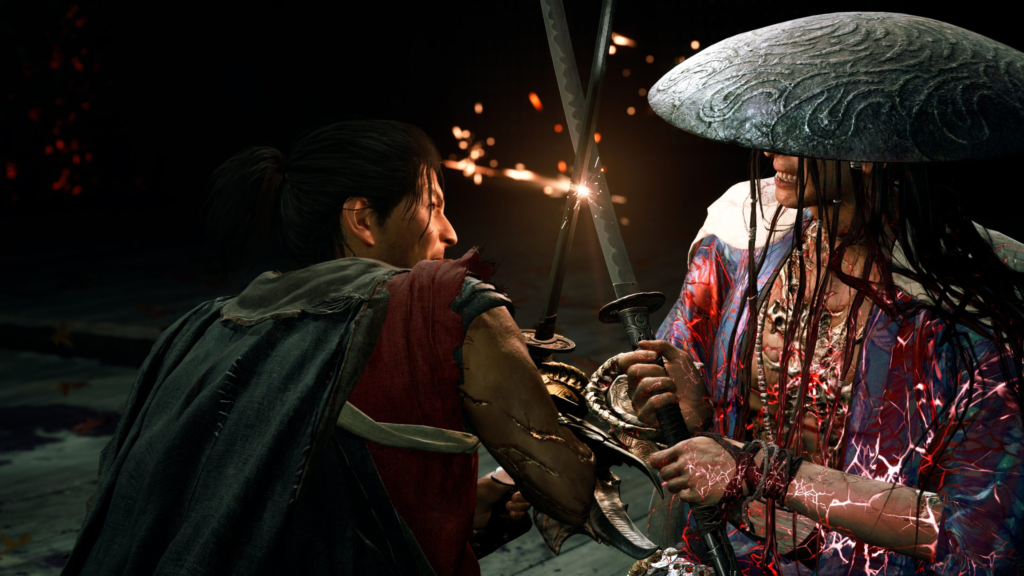
Combat is most of what you’ll be doing in Way of the Sword, which makes sense. Musashi is capable of doing a one handed attack and a two handed attack with his sword. Think of them as a light attack and a heavy attack. These attacks can be interwoven between each other to create combos, so you can do two one-handed attacks, and then switch to a two-handed attack. As you might guess, the two-handed attack does more damage, but is slower. Defensively, Musashi has a block and a dodge. If you block just before an attack hits, you do a parry, and if you dodge before an attack hits, you’ll do a perfect dodge, and in both cases you’ll take no damage.
You also get access to magical Oni weapons. When you absorb blue souls, you’ll fill a gauge, and when that gauge is full you can press a button and use a super strong magical weapon attack that, depending on the weapon used, does different things. The dual swords for example do heavy damage to an enemy, but they also force that enemy to expel yellow souls which you can absorb to heal yourself. The dual hammers cause small health damage but significant stamina damage, and later upgrades allow you to charge them for even more damage, but at the risk of you getting hit during the charge up.
These are fun and can turn the tide of a fight if they’re not going your way. You can swap them easily in a wheel to adapt to your situation. Blue souls will also come off bosses as you attack them too, so there’s ample opportunity to use them as long as you stay on top of absorbing souls, which this is an Onimusha game, so you should be doing that anyway.
Where the intricacy comes in however, is with the stamina system. Musashi and every enemy has a stamina gauge. This gauge is reduced by getting hit, or in the case of the enemies, when they’re properly parried. If Musashi can reduce their stamina to zero, they’ll be staggered for a long while and Musashi can do what’s known as a “Break Issen” on them. In the case of normal enemies, this always gave me an instant kill, and in the case of bosses it has multiple effects. Basically, combat comes down to, get the enemies stamina to zero so you can Break Issen them. Enemies that are defeated drop souls for you to absorb, and to further incentivize you to do a Break Issen, you get more souls for pulling one off.
Does this sound familiar at all? That’s right, Way of the Swords combat is just Sekiro: Shadows Die Twice, but with added mechanics. It’s by no means a 1-to-1 copy, but about 80% of it is just playing Sekiro again. In combat, I found myself choosing in most instances to parry attacks rather than dodge them, because dodging wouldn’t reduce their stamina gauges while parrying would. In addition, parrying either has a regular parry, or if you time it frame perfect, you get a perfect parry which will do even more stamina reduction. Dodging is either a perfect dodge, or a regular dodge, and your dodge doesn’t have any invincibility frames, so you can still get nicked mid-dodge, making parrying far superior to me.
Some other differences in combat include some occasional moments where you might attack an enemy at the exact same moment as you and initiate a clash where you have to mash the one-handed attack button fast, or another where you enter a draw where you have to counter them with the opposite attack that initiated the draw; if you started it with a one-hand, you have to then press two-hand to win, and vice-versa, where failing to press the right button (or any button) will result in your getting countered.
A lot of these mechanics are in place to make sure you’re paying attention to what you’re doing and to discourage button mashing. They’re simple but effective and required me to think about what I was doing even in simple situations. That being said, sometimes the enemy is overly aggressive in punishing the player for button mashing, as the basic enemy can and will magically dodge your attacks, sometimes even mid-combo, and they’ll try to counter you with an attack from behind. The problem is, there’s no tell for when this happens; it just does. I’ve had instances where the enemy dodged my first attack, countered me, I then hit him, and then he immediately dodged me again and I had to counter. Meanwhile the very next enemy of the same type, I beat him no problem with one-hand attacks and no dodging happened.
You might think, “Oh, well that’s just a mechanic in place to make sure you pay attention and respond properly!” but there’s one major thing that makes this frustrating: Musashi cannot dodge or block cancel any of his attacks. What this means is, when you press the attack button, the animation has to fully commit before the game will let you block or dodge. It’s not super noticeable when you use one-handed attacks, but you’ll definitely notice it when you used two-handed attacks. Because this dodge can happen at random, if it happens during a two-handed attack and you don’t react fast enough and instead attack again, you’ll find yourself swinging your sword while the enemy gets a free hit on you, even though you pressed block or dodge seemingly well before the attack should’ve hit you. You were punished because of luck, because the game just felt like it.
This ties in well with the next mechanic, which I hate for numerous reasons. Most enemies and bosses all have grab attacks. These attacks are telegraphed by their hand, appendage, whatever they’re going to grab you with will glow blue. When it does, you either need to move out of the way or, the more likely scenario, you need to dodge at the right time, and you’ll do a grab counter. Being able to recognize and pull off grab counters is not just something that you do as an advanced move; it’s something you have to do to survive later fights, because grabs, as you might guess if you’ve played any fighting or action game, will do massive damage to you. And because this is a modern action game, the grab animations take forever to watch, which to me just made me feel like the game was mocking me for messing up a frame-perfect move.
The first problem is that the tell for a grab is awful. The blue glow isn’t anywhere NEAR good enough. In multiple cases, I would get grabbed and wasn’t even aware it was going to happen because the game had a lot of stuff happening, and between the high fidelity graphics and lighting, I didn’t even recognize it, and getting grabbed by a grab you didn’t even KNOW was a grab never, EVER feels good, especially in a game where it’s designed to punish you for mistakes.
In addition to that, most times you can’t just move out of the way of a grab. There’s an enemy who, when he initiates a grab, will run at you. If you dodge to the side too early, he’ll magnetize right towards you and unrealistically turn AT you just grab you; he doesn’t run straight ahead, and his run takes a long time. The game forces you into handling grabs in only one way, and because you can’t cancel out of your animations, most of the time you’re going to be right next to the enemy anyway, and so your only option then is to perform a frame perfect grab counter.
Remember also how I said that the game doesn’t have guard or dodge cancelling? If you have poor luck and happen to be in the middle of a two-handed attack while a grab is coming at you, because you can’t cancel out of it, you’re very likely to just get grabbed because the game simply won’t let you dodge until the end of the attack animation. And because enemies don’t follow set patterns and instead use attacks at random, you can’t know when the enemy will grab. But you shouldn’t just never attack to prepare for something because even though Break Issen’s do a lot of damage, your regular attacks DO add up and reduce how many Break Issens you’d need to finish off the enemy. It’s like the game contradicts itself in some ways with this mechanic.
Finally, the game makes it unclear -how- to properly counter the attack. What I mean is, when you get the tutorial for it, all it says is to dodge the attack. But I found while learning it that if I dodged away from the attack, the grab would still get me and I wouldn’t counter. What I found out from experimenting, and with no help from the game tutorial, was to dodge INTO the attack to get it to register properly. But dodging into the attack also has to be done at the proper time, and I honestly don’t know specifically how to do it. To this end, multiple times I would get grabbed by an enemy when I was confident I timed it well, but I didn’t, or in the final boss, I failed the timing on it so many times that the game brought up the reminder tip to tell me to counter grabs. I know I could’ve turned them off, but I had forgot to, and I ended up mumbling “Oh fuck off, game” at the tip prompt.
Yes, doing these counters does a massive amount of stamina damage to an enemy, but forcing the player into one method of dealing with an attack is both boring and if the player isn’t good enough at the timing, just unfair. It’s easily the worst mechanic in the game and it feels poorly designed. Everything else is at least functional and intentional, but the grab mechanic was never fun to deal with in any capacity.
Lastly, enemies can use unblockable attacks. These are obvious and long telegraphed attacks. Unlike dodges, you have enough time to prepare for these, and they -must- be parried. Thankfully it doesn’t need to be a perfect parry. Missing this does huge damage and reduces your stamina to zero, so you don’t want to get hit by these. Unlike the grabs, these are at least fair because even if they’re color-coded, they’re still incredibly obvious, and parrying one of these successfully is both satisfying and a huge relief when you pull it off. Every time I got hit by these it did feel like my fault.
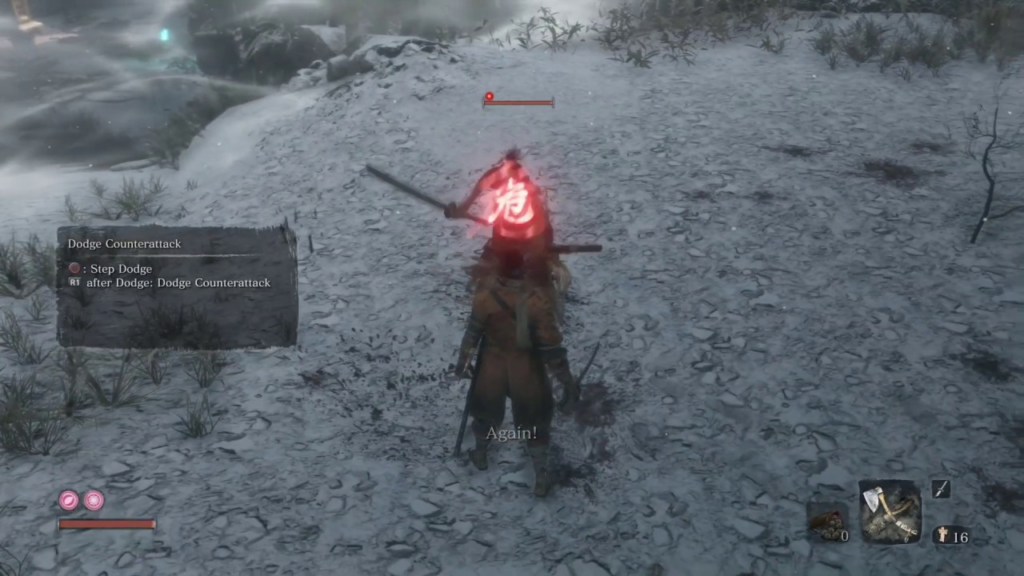
With these two attacks said, I want to bring up Sekiro again. Sekiro also has unblockable attacks and grab attacks. However, Sekiro does something Way of the Sword doesn’t: It makes it EXTREMELY OBVIOUS that an enemy is about to do something your ass needs to respond to. It achieves this in multiple ways. First, there’s a red line flash, that also includes a giant Japanese kanji. In addition to this, there’s an obvious audio cue. This symbol and that audio cue together live on in my brain from the many hours I played of that game, making me feel and think “Oh shit I need to get out of dodge NOW!” In no instance does making that telegraph of that attack feel less important, or any less dangerous. I would still often get hit by those attacks because of my own failure. But that failure didn’t come because I couldn’t see it or prepare for it, it came from my own personal mistakes. Because Way of the Sword doesn’t properly telegraph its most important attacks, it feels like a significant failure on the developers part for fairness in combat.
Making it a purely color tell with no audio cue of any kind is also extremely unfair to colorblind players and puts them at a disadvantage. But I feel with how small the attack graphic for the grab is and how busy the game screen is, even if it weren’t a color issue, it wouldn’t matter regardless. How this got tested and no one ever pointed out “Hey, grabs can actually be pretty hard to see, maybe we should telegraph them better” is beyond me.
“But Prinny! You should just look at the attack animation of the enemy to determine the grab!” Sure, but for one, some grab animations aren’t obvious and look similar to other attacks, and for two, they bothered to program and design a specific color and look FOR grab attacks. If they only wanted you to look at animations, they wouldn’t have bothered to indicate this attack type. And if they put it in the game and it fails to do what it should efficiently, then it should be criticized for failing in that execution. Not only that but the fact that the game that this one seemed to take huge inspiration, or at least ideas from, did it so much better means that they didn’t seem to understand why FromSoft chose to do it that way.
All of this is to say that I didn’t vibe with the combat. I was good enough at it and I learned it, but I just didn’t find it super fun. Musashi handles very heavy and his attacks having to commit makes me feel like the controls are in some ways unresponsive. I know that they’re not purely because the game is intentionally designed for your every action to have a consequence, but none of that matters if it doesn’t feel fun to play. I kept thinking back to Sekiro how I could dodge out of things, and when I pressed a button, Wolf would do the thing. Being able to dodge cancel and block cancel never made the game feel too easy, but more importantly, it felt fun to control Wolf. I loved playing as him and the combat felt super smooth. Way of the Warrior doesn’t feel that way.
It’s like this intentionally too. The developers stated they wanted the game to be cinematic and that they wanted to combat to feel like a sword fight grounded in more realism. But in so doing, they made a game that can feel clunky or unfair, all for the sake of realism. I also find that choice baffling because…this is Onimusha. A game where demonic zombie-like creatures and mythological monsters come to life, or a game where a regular man can parry a giant multi-ton Oni monster with just a sword. What part of any of this is realistic!?
At around the halfway point, I decided to turn the game onto the easier difficulty. Not because I was struggling, but because I was kind of tired of the combat, and I decided I wanted to see the rest of the game, but I didn’t want to delve too far into the combat itself. It’s not that I couldn’t handle the normal difficulty; I just didn’t want to. Something I noticed as I was selecting Story difficulty was that it was going to turn on a setting called “Action Prompts”. I had seen that in the settings but I had no idea what it meant, so I left it off.
Action Prompts shows you what button you need to press in order to properly counter or dodge the enemy. It comes up as the monster is attacking you and is supposed to give you time to prepare as well as help you with combat and knowing what button to press. This seemed like a really cool feature for accessibility, but I realized it very quickly had a couple problems.
For one, Action Prompts doesn’t tell you proper last minute timing. It only shows you at the beginning of the attack. Which means that you still have to execute a last second attack properly on your own. Yes, it’s helpful in showing you the button and reading the animation for you, but half the time, the hardest part is getting timing down. Another problem was how the prompt shows up above the head of the enemy…but if they’re not on screen, you can’t see what they’re going to do. The game tries to help with offscreen enemies by showing red or blue lines to indicate attack types, but sometimes those blue lines simply didn’t show up, and I’d get grabbed from behind.
Plus, if there are multiple prompts on screen from multiple enemies, it can still feel overwhelming, like the game wants you to press multiple buttons at once. And because it shows up over their head, if you get pushed into a wall, you aren’t able to see the action prompt, much less the enemy.
Story difficulty was also surprisingly challenging too. I was expecting this choice to be much more breezy, but I still had to be at the top of my game. Enemies still did a lot of damage, and while I didn’t have too much problem, I couldn’t help but feel like maybe this difficulty wasn’t easy enough for what it’s advertised as.
Besides combat, you’ll do various other things, such as complete sidequests or explore and find treasures which have materials or usable items inside such as talismans to give temporary strength and defense boosts, and other goodies.
The sidequests are nothing to write home about. Almost all of them consist of, talk to NPC, go to location, kill enemy, report back to NPC, or find hidden flying genma in old zones you have to backtrack through. Or the last one I mentioned earlier which is a treasure hunt. They’re pretty bland, though one of them has text which is a reference to Ghosts ‘n Goblins, and that was pretty cool. You’ll want to do these as the rewards are a lot of materials and sometimes Charms, which are equippable accessories to help you in various ways.
There’s one other set of sidequests which are slightly more involved involving a character named Lady Murasaki. She wants you to examine strange happenings and find data on them and hopefully help the person in need. These particular sidequests are voice acted and have much more substantial rewards, but they all boil down to the same thing: talk to NPC, go to location, talk to another NPC, kill some enemies, run back and talk to NPC, and repeat until finished.
The stories they tell, while more compelling than the standard sidequest, aren’t -that- great. They’re good, but none of them really wowed me or anything. Murasaki shows up in her butterfly form in these quests, and she, like most characters in this game doesn’t have much personality either. She kinda just says things like “This seems to be the work of the genma! You should help them! Examine this for me!” and then you do the thing and she says thanks and…you’re done. The most that happens is Musashi bats at her when she flies near him, so I guess that’s something.
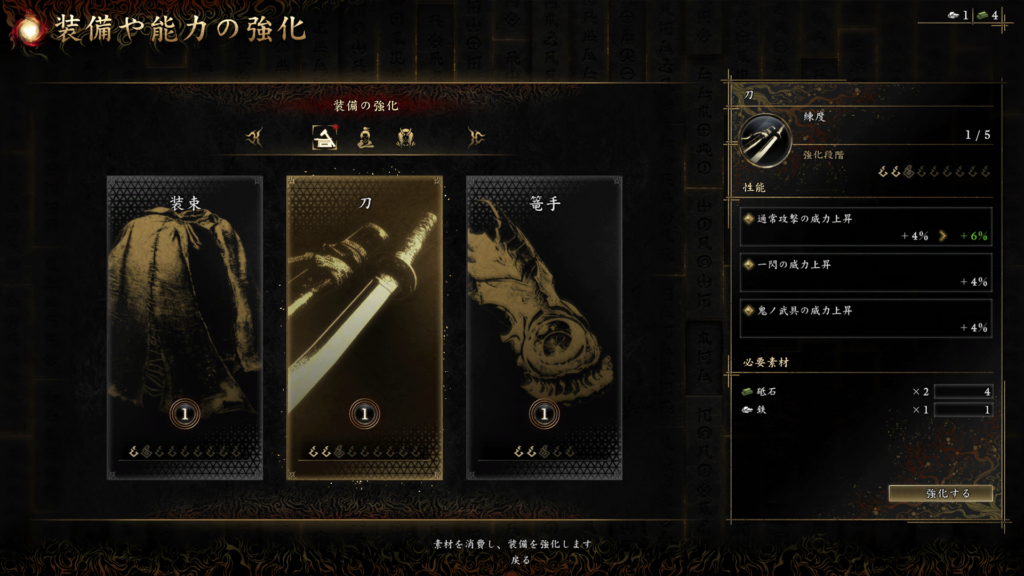
In between all this, you’ll also be upgrading your stats with materials. You can upgrade your clothes, sword, and gauntlet, which affects your health and stamina, damage, and your ability to absorb souls as well as a second gauge for your Oni weapons respectively. While the health upgrades feel significant, I never felt like upgrading my damage meant anything. Damage upgrades increase in percentage increments, and most of the time, you increase that amount by two percent each level. Considering you start at 100 base damage, an extra 2 isn’t all that significant, nor is 110 damage for that matter. If an enemy takes 4 hits to kill at 100 damage normally, 110 damage isn’t any different than hitting the enemy 4 times regardless. More likely than that, you’ll probably break their stamina gauge and instant kill them anyway, so leveling your damage feels…almost meaningless.
By the end of the game (so around 25 hours or so), I had maxed out my weapon, and the max damage increase is 100%, so you do double damage. But by the time you get to this point, most of the genma aren’t weak variations anyway, so you don’t really get to see a significant difference in your damage output. Not to mention the amount of effort it takes to gain levels with materials and how every level increment increases by such a minuscule amount, it ultimately feels useless.
Let’s compare this to Onimusha: Warlords, the first game. In that game, weak mook genma takes 4 hits to kill from your lightning sword, the first major weapon. When you upgrade it with souls, the enemy instead takes 3 hits, and at max level, they then take 2. This feels significant, and it’s clear that upgrading your weapon mattered. The fact it takes you about an entire playthrough just to double your weapon damage when that was something you could feasibly do within the first 30 minutes of the original really shows that upgrading wasn’t a consideration in the slightest to making the game easier. Not to mention the original was way simpler with upgrading, making it feel more cohesive and more focused on the action. With Way of the Sword, it feels much more arbitrary as a result.
Finally, you have skill trees. Skill trees are either far too useful and you wish that they would’ve just given you this ability from the start, or they’re meaningless and you just kinda get the abilities to have them. Thankfully Way of the Sword leans into the latter, which is way more tolerable, though it does have a good mix of meaningful abilities. Getting the “deflect” ability was a game changer for me and I used it often, while also being able to equip more charms and reflect arrows was very useful.
I hate saying all these complaints because this game was very clearly made with love. The facial recognition tech is really cool, and it was impressive to see it when it happened. The extra bits of lore you get from the collectible Lion Dogs is neat. The temples in the game were designed as their real life counterparts, and the developers got the help of the people at the temples to get their design just right. There’s extremely beautiful ukiyo-e art done by insanely talented artists that are breathtaking to look at. The choreographed kabuki dance by Okuni was done by a talented kabuki dancer and is enthralling to see. The enemy designs are sufficiently creepy, and the bosses all look really cool. The environment design is really good, and the game keeps a stable framerate on a base PS5 on performance mode.
The best way I can describe how I felt playing this game is just disappointment. The gameplay started to feel stale after a while, the mechanics, while fun at first, overstayed their welcome and the flashiness lost all its meaning real fast. For as cool as the Oni weapons were, I wished I could’ve equipped them and used them too. Wouldn’t it have been cool if you had other weapons to equip besides your katana like in the old games? What if the magic attacks were mapped to those like in the old games, or if those weapons you had new combos you could pull off, or maybe you could dodge and block cancel with a weapon at the cost of reduced damage from that weapon? These are just spitball ideas that I think would’ve gone a long way to preventing the game from becoming too stale.
The fact that I didn’t like the combat mechanics much because of certain design decisions made me realize that by the time I was at the halfway mark, I was ready for the game to be over. If this series hadn’t meant so much to me, I wouldn’t have bothered finishing it. But this is Onimusha, an action series I love and have enjoyed for a long while now. You saw my picture of that box, I played the first 3 games many times, and they were all great! I even got to play through Dawn of Dreams with my late friend who passed away, and now my memories of that game carry weight and meaning to me, and I love that game because I was able to have those memories with a dear friend.
Perhaps this is unfair to the game, to place it on such a high pedestal and to give it these expectations. Not to mention I know why the game is the way it is and why it plays the way it does. Games in the modern day have to adhere to whatever the modern stance is. That stance will change in another 10 years, and expectations will be different. Design will in turn reflect what is necessary for the time and what people want and expect. Way of the Sword could never be like the old games because to do so would doom it to failure from everyone else who wasn’t nostalgic for the old way of doing things. I recognize this and understand it completely.
And yet I didn’t like it, and I feel like something I loved became something else. Like myself, it too has grown and adapted to what it needed to be to survive. And it will survive because it reviewed well, and others seem to love it, and it has already sold over a million copies. Video games are a product, and they need to sell, and Onimusha did what it needed to do. No doubt Capcom will see it as a success and this style of gameplay will propel it into potential sequels which I’m sure will play just like this with some changes.
But with my current track record of disappointment with modernity of gaming, I don’t think I’ll be checking it out. In truth, I’ll probably be avoiding most new releases for a while now, with the exception of the Ocarina of Time remake set to come out in a couple months at this time of writing.
Way of the Sword is a game I was excited for, but I left it feeling deeply disappointed after waiting 20 years for it. It’s a game that I played, went through, and I’ll probably forget about it at some point. Or at the very least it’ll come up in conversation and I’ll remember playing it and that feeling of disappointment again.