
The first ever Dynasty Warriors game, otherwise called Musou games, I played was Dynasty Warriors 4. These games are really simple in premise: You play as a warrior who is capable of mowing down tons and tons of enemies using simple button combos, and they don’t usually put up much of a threat, if at all in most cases. There are stronger generals to fight of course, and they put up much more of a challenge, but on the whole these games aren’t super challenging until you go into their harder difficulties or you try to fight Lu Bu unprepared. IYKYK.
Naturally, these games get panned online, especially in the critic scene. “All you do is mash square.” “What’s the point of the peon enemies if they don’t do anything?” “These games are stupid repetitive.” and on and on. Not to mention that back then, they made a new one every year or so, some of them being the same game but expansions instead. They were ultimately niche and it felt hard to talk about them online for a while because the conversation always circulated in that same manner. In retrospect, I probably should’ve just went to a fansite with a forum or something to talk about them, but I didn’t and instead went to general forums instead, so a lot of the time it was all negative. It also became incredibly funny to me a few years later when Call of Duty kept releasing yearly games that were all the same thing and they’d be praised as individual masterpieces despite being copy and pastes that people chose to see the nuance in, but no one would do the same for Dynasty Warriors.
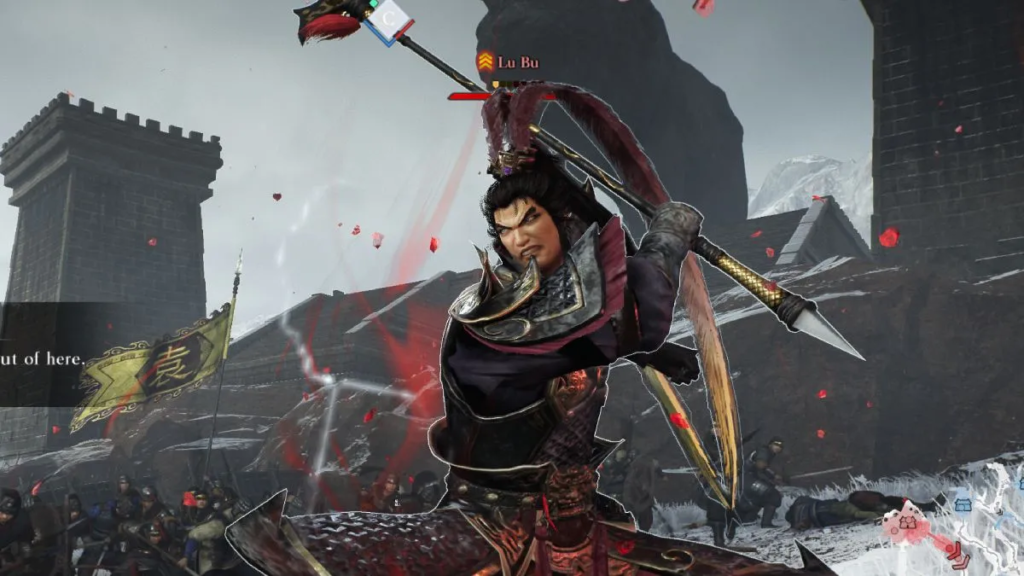
I love these games precisely because of that level of simplicity. It’s fun to just run into a group and plow through mobs with crazy over the top moves. It’s satisfying watching that KO count grow, and using combos you know for proper crowd clearing. It’s fun to fight the generals and have to pivot to a touch more strategy (though admittedly not much strategy) and get a reward of a stat boost or a new weapon to make your character stronger. There were always lots of characters to play as too with unique movesets and such and it was just a fun game to plop in when I didn’t want something incredibly taxing and I just wanted some simple, raw fun.
After a while, the hate for it died out and Omega Force kept making more of them anyways because no matter what the haters said, people loved these games and bought them, so they made them for their audience. Surprisingly, the opinion of these games went up over time and some of them got decent scores like Dynasty Warriors 8.
But then in 2014, something that to this day I still cannot believe happened, and we got a game called Hyrule Warriors.
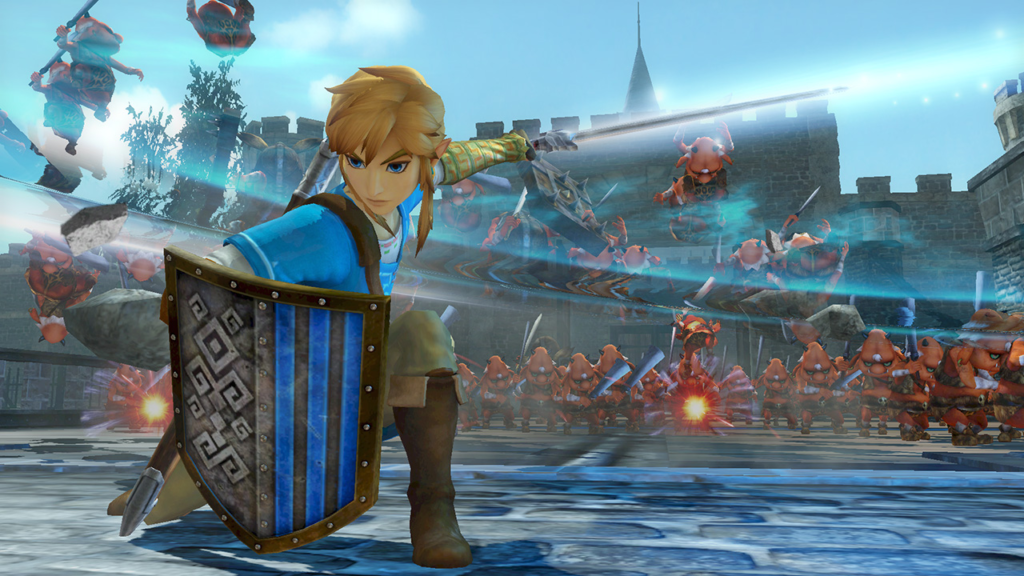
The moment I laid eyes on this I felt two different things: The Zelda fans are going to play this game and tear it to microscopic fucking shreds, and I’m going to love every second I play of this game. I was correct on both accounts. Just as quickly as the Musou complaining had left the internet sphere, it quickly resurfaced because people were going to buy this game because it had “Zelda” in the title, so it was already a guaranteed million seller. Which it of course did and simultaneously became the best selling Musou game at the time because all you have to do is slap Zelda into something and it’ll sell no matter what it is, just like Mario and Pokemon.
Yet again I wanted to be excited and talk about the game, but yet again, I was met with constant snark and negativity about the same tired complaints people had been saying about a game style that I loved. This game had the added benefit of having an original story in a franchise where the fans are never satisfied no matter how the stories are written, so it naturally got labeled as “just being fan-fiction” or my favorite one, “It’s not canon and not on the timeline so it’s irrelevant.”
This is a lot of rambling, but all of this is because there’s a point I want to make with all of it, and that’s hypercriticality. I might have used musou games as a main point here, but when you really stop and think about or just look, people value hypercriticality to a massive degree. On the internet, snark and criticism is king. If you admit to liking something despite its faults, then you’re nothing more than a blind fan or someone who has no taste. Your opinion to them holds no weight because we’ve equated liking something to either complacency or you just didn’t examine it hard enough. I’ve noticed in many conversations online how the person who talks the most critically is always the one people value because it makes them appear to be the most well-thought out; after all, they’re critical so they MUST know what they’re talking about, right?
The problem with this approach comes when you suddenly ask someone who just spent all that time listing off things they didn’t like what they DID like, and they often struggle to do so. Someone whose entire purpose is to be eternally critical is by default biased, and in my eyes, it’s hard to take what they’re saying as valuable, because in order for something to have a bad quality, there must be a good quality for it to have a counter to. The main problem though, is that people have forgotten how to just enjoy things. We constantly have our guard up, ready to pounce and trounce on something without giving it a chance. We read negative reviews of things we barely look into and say, “That game got a bad review? Sucks to suck, LOL.” and move on without any consideration even if we were potentially interested in it.
You ever see a YouTube video or read a post by someone where they’re super nostalgic for the old days when they were kids and how games were better then and all that jazz? The thing is, I don’t think people want games to be like that again when they say things like “Games were better then!” I think more of what they’re saying is they want to be young again so they can enjoy things again. God knows the number of groups I’ve hung out with of people who love retro games and yet at every opportunity complain about retro games being janky or bad or whatever, completely contradicting themselves. This phenomenon exists because people don’t remember how to enjoy things for what they are. We’re adults now and we’ve been through the ringer and had our lives ruined in 10 different ways and in 5 different languages, so we know the way of the world and what’s good and what isn’t. It’s hard to remove that mask once you put it on because it’s what you know and how you survive.
But if you can learn to remove that mask to just enjoy something, you start to find more and more that there’s still lots of things to find happiness in, to see how things could be viewed as fun to other people, or even appreciate the absurdity of something for the sake of what it is rather than question the reason for its existence. I don’t really like rap music or sports games for example, but I still understand why people like them and appreciate them for what they are even if I don’t personally enjoy it, and I think that makes a huge difference.
Hypercriticality also exists because it feels like that’s what you have to do to feel socially included in this circle. No matter how much people will decry it, humans are social creatures by nature, and even the “weird” ones still have to have some form of socialization, and if the common thing of acceptance for a topic leans into one idea, then that’s what everyone is going to lean towards. Choosing to defy that makes you an outcast and as a result you’re looked down upon which, as a human, is not something your brain wants to have happen usually. But it’s funny then that in this instance, the common ground of what is acceptable in this bubble is itself defeatist because of excess. And in this instance, I think it’s best to decry it.
I want to make something perfectly clear: I’m not saying you should never criticize anything or that it’s not okay to ever be critical. The problem isn’t that people are sometimes critical, it’s that people are critical so much and so often about every element that they’ve forgotten to sometimes just enjoy themselves and as a result, they lose touch with why they even like the hobby to begin with. After all, if someone asks you if you like Zelda and you say it’s your favorite series yet all you do is complain about every single thing about it, do you really enjoy it at all? I wouldn’t blame the person who asked you what you liked if they assumed you didn’t like it.
I also want to make it clear that I’m not saying you have to love everything either. Sometimes you just don’t vibe with a game or movie or whatever and that’s perfectly fine. I played Crimson Desert and tried desperately to like it but I simply couldn’t, and finally had to put it down and accept it wasn’t for me and that I disagreed with a lot of the mechanics and such. Sometimes that’s just how it goes, but I also wasn’t trying to be hypercritical of it either.
I used to write for a couple websites as a columns writer and then as a video game soundtrack reviewer, and I used to think to myself that one day I’d like to be a writer for a website or maybe do game reviews, but the more I wrote and the more I spoke to people and saw what people wrote, I started to realize that being a reviewer would require me to strip away gleaning enjoyment out of a thing because I wasn’t playing a game because I wanted to: I was playing a game because I was on a tight deadline and I had to churn something out for the sake of a job. I’ve often wondered how many reviewers are exactly like this, where they have to suffer through a game just so they can spit something out for their job, even if their job is about informing the player of whether or not they should play something. If I had to do that all the time for my day job, I think I’d just hate video games and I’d want to drop the hobby entirely.

For me, I try to enjoy things as much as I can. I realized one day while I was playing a game that I genuinely wasn’t having fun with anything, because I started to realize that all I was doing was complaining about everything in every game. I’d forgotten how to just enjoy something, and even old games I liked I would just grumble at because I spent so much time criticizing them that I was robbing all the fun out of them by utilizing what I had thought and were told were objective criticisms. But when I thought about it more I came to a realization.
No matter how hard we try to be and how hard we try to hide it, humans are not rational creatures.
Do I know every single flaw in a Musou game? Yup. Do I recognize that they’re repetitive and you can mash square and occasionally triangle and win? Absolutely. Do I know that they’re massive grindfests where you play a lot of the same stage over and over and they’re all about “number go up” and are practically skinnerboxes? You bet I do.
And yet I don’t care because these games are still fucking fun to me, and that’s all that matters.
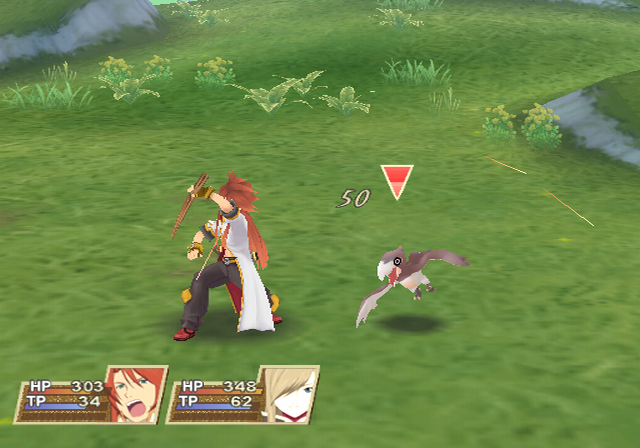
You can shove all the logic and reasoning onto why I should hate these games and even if there’s solid reasoning behind it, I don’t give a flying fuck, I find it fun, I find it enjoyable, and that’s the end of it. If I listened to all the hypercriticality and bluster people made about games, I seriously doubt I’d have found even half the games I played and enjoyed, just because everyone screamed “STAY AWAY IT’S BAD.” I remember reading a review for Tales of the Abyss in an old Game Informer once and that they gave it a 7 out of 10 and said it was a boring, bog standard JRPG. I ignored that review and bought it and Tales of the Abyss is still one of my favorite Tales games despite its shortcomings. I liked it so much I played through it twice almost back to back despite it being a 60 hour RPG. I would’ve completely missed it if I’d listened to reason or logic.
I think now more than ever it’s important to learn how to remove the hypercritical mask. At this time of writing, not just the games industry, but the world is dealing with unprecedented times, and learning to find the joy in things is even more important than its ever been. I know for me that I have to do that, because otherwise I’ll just give up entirely on video games, and I’ve come damn close multiple times. More than anything though, being able to enjoy things brings me happiness in some form. If we stop looking at something for what it isn’t or what we wish it was and instead look at it for what it is, I bet we’d find a lot more to love from it than we’d realize. That kind of thing takes a lot of mental strength, especially in this day and age and especially as adults, but I can only imagine how much better off in our lives and how much happiness we’d find if we could all learn to do that more often.